

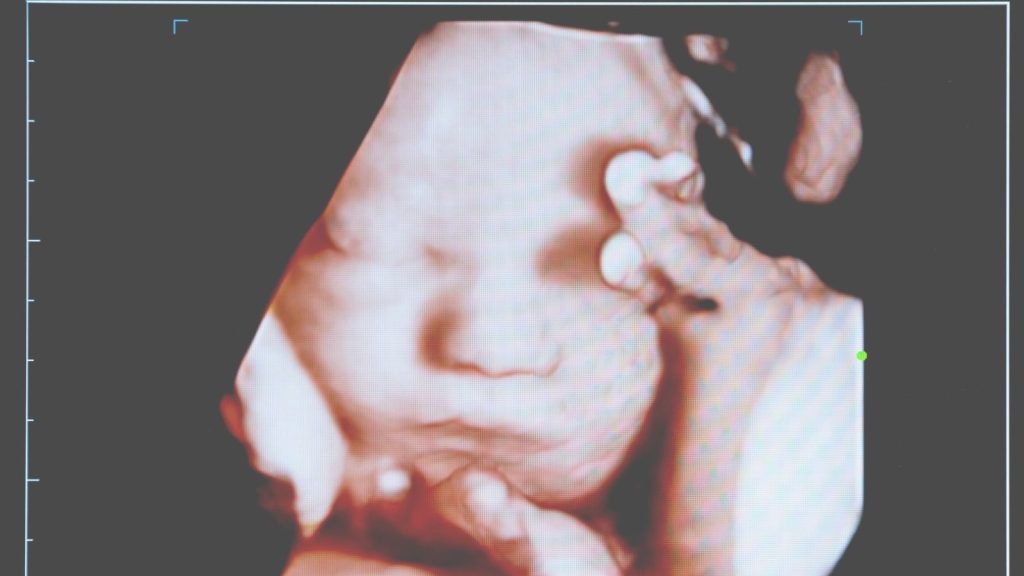
Two of Idaho’s key prolife laws are under attack—and a federal judge will soon decide whether to expand abortion access across the state.
Dr. Stacy Seyb, a maternal fetal medicine specialist working for the St. Luke’s Health System, sued Idaho last year over our Heartbeat law and the Defense of Life Act, which together prohibit nearly all elective abortions.
The trial in Seyb v. Members of the Idaho Board of Medicine concluded last week—and the outcome could determine whether Idaho will remain a state where preborn life is protected.
Thankfully, Attorney General Raúl Labrador and his team of lawyers have done a great job defending the laws.
But there’s still a chance that U.S. District Judge Lynn Winmill – a Clinton appointee who is overseeing the case and has struck down prolife laws before – could issue a decision that would prove disastrous for babies in the womb.
As you might expect, much of the media narrative surrounding the case is simply fake news.
With that in mind, we’ve put together an explainer that’s included below so you can understand the issues at play—and so you can see through the media lies.
Explainer: Idaho Abortion Laws on Trial
1. What is the legal landscape for abortion law in Idaho today?
Preborn human life is protected in Idaho by two key laws. The first is our Heartbeat law, which took effect in early August 2022 and was researched, drafted, and championed by Idaho Family Policy Center. That law creates civil liability for medical professionals who unlawfully perform an abortion after a baby’s heartbeat can be detected—usually about 21 days after conception.
The second is the Defense of Life Act, which took effect in late August 2022. That law criminalizes providing an abortion once a pregnancy is clinically diagnosable—usually about 14 days after conception.
Operating together, these two laws have effectively eliminated access to elective, in-state abortions by imposing civil and criminal penalties on medical professionals who perform an abortion at almost any stage of pregnancy. Both of these laws include exceptions for medical emergencies, rape, and incest, and both also provide ample latitude for physicians who offer medically necessary care, including life-saving abortions.
These laws have already proven effective at protecting preborn life. In fact, the statewide abortion rate has declined by 99.7% since our Heartbeat law took effect, according to official data published by the Idaho Department of Health and Welfare. Thousands of babies have been saved as a result of these laws.
For more information, please see the Idaho Family Policy Center report – “Abortion Laws in Idaho: What is Working and Recommended Improvements” – explaining these laws in further detail and offering recommendations on how they can be strengthened.
2. Why is Dr. Stacy Seyb challenging these laws? What are his claims?
Dr. Stacy Seyb is a maternal fetal medicine specialist who works for the St. Luke’s Health System. Court documents reveal that prior to Idaho’s abortion laws taking effect, Dr. Seyb “regularly performed abortions” in which no medical emergency existed. And since the laws have taken effect, Dr. Seyb has airlifted several pregnant mothers out-of-state to get abortions.
Dr. Seyb wants to perform abortions for a whole host of reasons. These include but aren’t limited to:
- If the pregnant mother had a chronic disease like asthma, diabetes, or high blood pressure, regardless of whether she could get other medical care to treat her underlying health conditions;
- If the mother is pregnant with two or more babies, regardless of whether the pregnant mother could safely bring her twins, triplets, or quadruplets to term;
- If the preborn baby received a “life-limiting” diagnosis, regardless of whether he or she could survive weeks, months, or even years after delivery; or
- If the pregnant mother suffers from anxiety, depression, or threatens self-harm, such as suicide.
Dr. Seyb claims that Idaho’s abortion laws unconstitutionally infringe on a “fundamental right” to “obtain medically indicated abortion care” that is protected by the Due Process and Equal Protection clauses of the Fourteenth Amendment to the U.S. Constitution. Dr. Seyb also argues that the abortion restrictions infringe on the constitutional right to self-defense because pregnancy almost always causes some risk to the pregnant mother.
3. Why did Dr. Seyb airlift pregnant mothers out-of-state to receive necessary medical care, including emergency abortions?
Dr. Seyb argues that he has had to airlift pregnant mothers facing medical crises to other states because of the lack of clarity and inadequate exceptions in Idaho’s abortion laws. But according to the Idaho Supreme Court, these abortion laws are clear, understandable, and legally sound.
In the landmark case Planned Parenthood Great NW v. State (2023), the Idaho Supreme Court found that any physician – and even any “person of ordinary intelligence” – should “unquestionably understand” what care a physician can provide under our state abortion laws.
As the state Supreme Court has explained, the “plain language” of the Defense of Life Act “leaves wide room for the physician’s good faith medical judgment,” and the Heartbeat law “simply requires the physician to exercise reasonable medical judgment” when providing care and considering whether an abortion is necessary.
The Court has also made clear that none of the state abortion laws require physicians to be “certain” that the mother will die or is facing “imminent” death before a physician can provide a life-saving abortion. Miscarriage care is permitted, as is the treatment of ectopic and molar pregnancies. Additionally, Idaho’s abortion laws do not prevent physicians from providing medically necessary healthcare to a pregnant woman, including cancer treatment or emergency surgery, even if such treatment results in the unintentional death of the preborn baby.
Astonishingly, Dr. Seyb admitted under oath that he has never read Idaho’s abortion laws. He also admitted that he never read the decision in Planned Parenthood Great NW v. State, in which the Idaho Supreme Court explained the contours of both the Heartbeat law and the Defense of Life Act. And to make matters worse, Dr. Seyb never received any training or guidance from his employer (St. Luke’s) on how to comply with the requirements of these laws.
As a result of his ignorance, Dr. Seyb was airlifting pregnant mothers out-of-state for medical procedures that he presumably could have provided here in Idaho. Attorney General Labrador explained in court documents that “the clear facts show that Dr. Seyb and St. Luke’s were flying patients out of state in ignorance of the laws’ requirements.” This was not only unnecessary—it was also dangerous. As Dr. Seyb admitted, “Arranging an airlift is not without risk or cost,” because a “patient’s condition could deteriorate to the point of no longer being stable for transport.”
For years, local news outlets have been peddling the narrative that pregnant mothers are having to leave the state – and sometimes be airlifted out of state – to receive necessary medical care. But here’s the thing: the litigation in Seyb has confirmed that such performative measures were never necessary to comply with state laws.
4. Do Idaho’s prolife laws unconstitutionally violate the Fourteenth Amendment or infringe the constitutional right to self-defense?
No. The U.S. Supreme Court explained in Dobbs v. Jackson Women’s Health (2022) that “abortion is not a fundamental constitutional right,” and “no such right is implicitly protected by any constitutional provision, including … the Fourteenth Amendment.”
The Supreme Court also affirmed that state legislatures “may regulate abortion for legitimate reasons, and when such regulations are challenged under the Constitution, courts cannot substitute their social and economic beliefs for the judgment of legislative bodies.” Indeed, “state laws regulating abortion” are “entitled to a strong presumption of validity.”
Furthermore, no court has ever recognized a constitutional right to abortion is protected under the right to self-defense. As Attorney General Labrador explained in court documents, Dr. Seyb appeals to the right of self-defense “without citing a shred of legal or historical authority applying that right in the abortion context.” Dr. Seyb is merely trying to invent a new constitutional right to abortion, despite the U.S. Supreme Court’s holding in Dobbs that abortion is not constitutionally protected.
5. Who is the federal district court judge presiding over the case? What has he said about this case?
The Seyb case was assigned to U.S. District Judge Lynn Winmill, who was appointed by President Bill Clinton.
Judge Winmill is known for controversially declaring Idaho’s partial-birth abortion ban unconstitutional in the late 1990s. And just a few years ago, Judge Winmill also blocked the state law banning sex change drugs and surgeries for gender-confused children from taking effect, though his ruling was later overturned by the U.S. Supreme Court.
Importantly, Judge Winmill has already indicated how he might rule in the Seyb case. Last February, he issued a decision in which he posited that the “fundamental right to self-protection provides a compelling basis for a due process right to a medically indicated abortion.” He also questioned whether Idaho’s abortion laws are constitutionally permissible without an exception for when the mother threatens to harm herself unless she obtains an abortion.
6. What happens if Judge Winmill rules in favor of Dr. Seyb?
A final ruling in favor of Dr. Seyb would blow open abortion access in Idaho. Dr. Seyb is trying to legalize abortion for almost any reason. Such a ruling would undo much of the progress that Idaho has made in recent years to protect preborn babies, and the statewide abortion rate would increase significantly as a result.
That said, Idaho could appeal such a ruling to the Ninth Circuit Court of Appeals and eventually the U.S. Supreme Court. On appeal, Idaho’s abortion laws would likely be vindicated—although it’s worth noting that an appeal could take weeks, months, or even years to work its way through the court system. Notably, Idaho’s abortion laws have already been largely upheld by both state and federal courts, including the Idaho Supreme Court. And with the U.S. Supreme Court holding in Dobbs that the regulation of abortion is an issue best left to state legislatures, there are strong reasons to believe that Idaho’s abortion laws will continue to withstand judicial scrutiny.
